Of Mooncursers and other Spun Yarns

Of Mooncursers and other Spun Yarns
Click the link below and visit my Book site
Showing posts with label Dundalk. Show all posts

Friday, March 18, 2011

The Last of the Pufferbellies in Dundalk

WE were at war! The Japanese had bombed Perl Harbor and Germany declared war. It was 1942! We were loosing the war in North Africa and we were being Driven back in the Pacific. We were melting down everything metal we could find. We kids collected aluminum pots and pans and turned them over to the fire department to be used in building airplanes.

The Baltimore News Post put a story on the front page that Steam locomotives would be towed to the steel mills to be melted down to build guns and ships. On that day hundreds of people walked down the streets to the railroad crossings to watch the locomotives being pulled through town.

America was well attached to it's steam locomotives. Lionel and American Flier toy trains were the most popular toys around every Christmas. Engineers were our heroes. We looked on steam railroads in aw.

There was more, we were watching the end of an era and everyone sensed it. It was also the approaching end of a way of life but we didn't sense that and it didn't come for may years. Our American love of machinery would one day become a love of cheap electronic toys. The highly skilled American craftsman was soon to be equated to the low level white collar worker.  The caftsman's skill and years of education and training was lost in a single generation.

Only thirty years later another long line of machinist, mill wrights, tool makers and die makers all tramped there way to big box stores to greet customers.

The pride of a nation, the machinery that provisioned a war on two fronts and overcame odds that the whole world thought America would succumb to was sold to the Chinese for pennies. We have been reduced to making electronic toys and calling this failure, progress.

Today we send our children to get a degree and become nothing more than specialized word smiths. Few thus educated have the ability to think outside the narrow area of their study.

It is the experienced mechanical Engineer that has gone with the machinery. The kids come out of college knowing nothing of real know how and there is no factory to gain the needed experience to become a truly qualified engineers. They don't even know they are lacking.

The Locomotives were only the first to go. Our lessor Gods, the production line would follow.

Our Children are educated to look back on those years of the assembly line worker as the dirty industrial years. Of course they were the years where America earned it's wealth to give our youth their educations. God Bless mass production.

I am sometimes accused of thinking outside the box. I reply, "It is not so.  I just have a bigger box than they."

Doug

Monday, January 1, 2007

Some Dundalk Happenings

There were some things that occurred around Dundalk and east Baltimore when I was growing up. I'll talk about them a little and then Tuesday or Wednesday we will start a book. I have about one Paragraph written and we'll make up the rest from there. I have no Idea what I'll write after that paragraph. Thats the way I usually write. Some say it takes courage to do that well maybe but all thats lost is a little time if nothing comes of it. Besides I have put away the start of a story and the story came to me a year later, funny thing is these are some of the better things I've written.

One year Standard Oil company burned down. There was a huge column of smoke and it headed to Dundalk. Every one sat out on their porches, people wondered all over town and watched. There were some who stayed out most of the night. We were all to far away from the fire for there to be but so much excitement, but every now and then one of those huge storage tanks would go off and flames would shoot high in the sky and you could hear and feel the explosion. One fellow in Dundalk decided to drive in town to see the fire. That was a mistake the because fire department for one reason or another commandeered his car. They used it for whatever purpose and parked it on Conklin Street in Highland town.. He couldn't find it for several days and the fire department didn't know anything about it. Boy O Boy did he take a kidding.

My Brother took a young lady out on a date and they were riding along when they started listening to War of the Worlds on the radio. It Scared the daylights out of both of them and he headed for her house. When they got there he shoved her through the front door and took off for home. He had run his model A ford coupe so hard the engine wouldn't shut off and it set in the driveway with the exhaust pipe glowing the engine popping and crackling but running.. We were listening to Charlie Mc Carthy on the radio and my brother burst through the front door and started telling my father about it. Dad said to my mother grab us some cloths where going to new Jersey to see this. Charlie and my father headed for the car and my mother caught them as they were getting ready to pull out of the Driveway and told them there was announcement on the radio that it was a fiction story. Well the story got out around Dundalk and my brother was Nick named Buck Rodgers and was forever after called Buck.

Wally Stevens beat up five Scottish seamen one night in the middle of the streetcar tracks on Dundalk avenue and the Red rocket had to wait until he finished.

Otts Mc Clelland built a 42 ft cabin cruiser in his back yard and hauled it to Owens yacht company and they put it in the water for him.

My father built an Air breathing jet engine in 1940 when there weren't any, he hung it under the floor timbers of the house aimed it out an open basement window and fired it up. It made such a racket the neighbors all came running and they had to stamp the burning grass out. They liked it so much they asked him to do it again and he did. They all walked away shaking their heads and one said that Fred Pollard is crazy, What the heck good is a thing like that? Fred took his drawings to Washington to show to the Government. They told him what he was messing with was a secret. They took his drawings and his working model and then investigated him. The neighbors probably told them he was a crackpot.

At the End of the war Otts Mc Clelland got a set of plans out of a popular Mechanics magazined, built a little camping trailer and the whole family went to Alaska by way of the Alcan highway. Otts said it was a terrible trip most of the road was gravel and they blew up the engine in their 1939 Hudson and nine tires in all..

Owens yacht company built landing Barges.

Some of us boys went to shoot sparrows with our BB rifles behind the brewery in the poplar trees growing next to it. We shot out a window by accident and then sucked some liqueur out of a keg. Some how we wound up at Jimmy Marks Bowling Alley and I made a pass or a crack, not sure which, at a pretty good sized Italian boys girlfriend. Well I got beat all around the lobby and the front side walk the only thing after that I remember was walking down Dunmanway. Learned a thing or two about getting drunk and being mouthy. Never did find the BB gun.

Caught a good friend sneaking down a half dark alley one night with the ugliest girl I ever saw. I teased him regularly until he threatened to beat the tar out of me.

We'll start a story tomorrow.

Doug

Friday, December 8, 2006

Out of depression

Dundalk was not long out of the depression. The town was still feeling its effects but was to some degree feeling prosperous. People had money to spend and could have spent a lot more than they did. We kids were daily treated to the wisdom that at any time the bottom could fall out and the horror stories of many that had lost everything and without care it could be our families at a time in the near future. The use of credit would have pushed things along faster and there was now plenty available. There were few takers though.

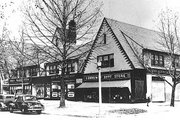
Across from the Dundalk streetcar stop was Dundalk Taxi Cab Company owned By mister Graff. Next door was Jimmy Mark's Boiling Ally. A lot of teenage boys set up pins here Those long boys with big hands did very well. If they were fast enough the tips would slid down the alleys. These kids worked till midnight on bolling league nights. Teachers were somewhat understanding about their homework and the fact that they often dozed off in class. Many of the boys were from immagent families who came to this country without a trade to work at. They were the first hit by the depression and the last to recover. In some cases that bolling ally money was needed by the family. All us boys were treated to the saying "Learn a trade be somebody and you will never be out of work." It worked for me. I doubt it was true but some said the bowling ally was built in a marsh and that they drove five thousand pileings to set it on. Like most tales of this nature there were probably some pilings underneath the place.
In the next block was Dundalk Hardware. To paint a house many people who did not trust canned paint, would buy ten pounds of white lead, a gallon, of boiled linseed oil, and a little turpentine along with that a quarter pint of Japan dryers. All mixed together you had a fine coat of paint that killed rot, fungus, bugs, germs and children if they ate it. I don't think any kids I knew ate paint, we ate food. We did chew tar. Gosh! Who knows why, it didn't taste like much. Seems I remember that it was good for your teeth. Now there teeth was something some of the kids could have used some help with. They had green teeth, I guess from a lack of brushing.
There were local town rivalries, that I think were inspired by baseball. Dundalk and every town around had a ball team. In Dundalk ball games were always played on the diamond at the school. Spirits ran high and nearly the whole town attended. It seemed every kid in town had a desire to climb the backstop. There was usually a policeman standing at it's back who could with one knot raising smack across. your calves, keep a fellow off of there for the rest of the day.

Dundalk had the nicest tennis courts around. There were three or four red clay courts all fenced about ten feet high. It was a strange thing, the boys all thought it was a girls game. Boys hung around but never played. Our next door neighbor Otts Mc Clelland got so angry when they asphalted over the red clay tennis courts he built his own and envited everyone to play on his courts, many did
Dundalk Bathing beach was the local place to go for a swim. It's local name was Snake Hole. Just around the bend was a marsh and snakes on occasion came from there. There was some truth, that on occasion, a snake would swim right through the middle of the place creating quite a stir among the swimmers. The beach was owned or run by Don Might and was really quite nice with picnic tables, and grassy areas that were dotted with thorny trees with white washed trunks. You didn't climb them!
Don was the only prominent man in town that the kids called by his first name. Don was short but built like a small bulldozer. He was an ex professional wrestler at a time when they really competed. You could pick him out in a crowd. Wih a neck, as big as his head and a barrel chest with long muscular arms. He walked with his own pecular gate that had a way of looking mennacing. A mark of a wrestler was coliflour ears and he had'em. His body was covered with red hair and I don't think his red head ever got wet it shed water like a duck. Now here was a fellow that ran a pretty tight ship. His gravelly voice over a megaphone was usually enough to command respect. Sometimes someone would try him but he usually just called the police. Across the creak from the beach was a place called HOLIDAY PARK. Sometime before the war It became part of the Maryland orphanage system. A large side wheel steamboat named Ann Arundel would come in there and spend the day and hundreds of orphans would get off to swim and play. You could see they were having a good time. It also made a boy or girl glad he had his Parents.

Maybe someone can correct me on these names I think they are correct but I wouldn't bet the farm on it.

Tuesday, December 5, 2006

Goin' over Dundalk


We in Dundalk Farms weren't quite "Dundalkers", at least in our own minds anyway. We all talked about walking over Dundalk and that's what we did and that's where you did things. You shopped, went to the movies, went to Church, and caught the Red Rocket (otherwise known as the #26 street car) to Baltimore. Boy! There could be a whole book written about riding the Red Rocket.
We became "Dundalkers" when we started to school. We went to Dundalk Elementary school and we could walk there. If you lived more than a mile away you had to ride a bus unless you got thrown off, which boys were prone to do.
I remember one troublesome boy having to walk from very near Old North Point road. That had to be four miles. He was a hardheaded Dutchman. The Teacher Mrs. Merritt offered him a ride home because he had a blister as big as a quarter on his heel. He replied, "The Principal said walk." The boy stood up and said, "If you'll give me one of them Band-aids ma'am I'll walk. I ain't lettin' no school off that easy." Those who rode a bus could not claim to be from Dundalk. They were from Holabird or some other nearby town or area and most were proud of it too. There was a fair amount of rivalry among the different communities. Most of it came from baseball, there being a ball park in every little town. Sandlot ball was a big deal in those days. Dundalk had several beautiful red clay tennis courts but only girls played. We boys thought it was a sissy game. For boys the big thing was shooting marbles. Now shooting “hootles” always led to fighting so we all got pretty good at that as well.
St Helena and Dundalk were called (a little tongue in cheek) twin cities. There was a restaurant on Dundalk avenue named the Twin Cities Restaurant. People hung out there from both sides of the street and with local rivalries being what they are there was often a doggone good fist fight to be had there. Pain and suffering being not among my favorite interests I always endeavored to be a nonparticipant. Stand aside always begets pain. So standing still makes a fellow a target and a non-moving one at that and there you go right in the middle of it. Good old Baltimore you'd get arrested for spitting on the sidewalk but you could fight up and down the streets and alleys all you wanted as long as you didn't spit or cuss. Local people didn't curse anyway—they cussed.


I'll do one more post describing Dundalk back in those days and then we will write a book.
By-the-way anybody know the fellow in the picture? It was taken at the old Logan air field there, where Logan village is now. My father took the picture in the late 1930's. I've had it all my life, don't know who it is but can't bring myself to toss it. Doug

Friday, December 1, 2006

Growing up Dundalk

Robinwood Rd. Dundalk, MD

As stated this will be the writing of a book If you follow along from day to day you will experience it as written. You will read it with bad punctuation, spelling and all it's other wart's and then you will see it as it is edited. You will see what I keep and what I throw away. You will be able to see it through to completion and then buy it from a print on demand publisher online. I expect this writing to take at least a year and maybe two. Know this! I am not a teacher and not only that I have almost no education. This would not be the way to write a book by almost anyone's standards. However it is my way so take my methods for what they're worth or don't take them at all. I would like to propose a toast to all of us and our completion of a book about Dundalk and it's folks. To "Dundalk and it's folks", it's success or failure.
These first posts will lay some groundwork by way of identifying some people, places and times and then we will begin the telling of a story. I have no idea what we will write but from experience I have every confidence it will all come together. Certainly not without numerous hitches.
The above picture is of The Pollard home place. My parents, Fred and Ruby, had four children Charlie, Dot, Madge, and Dougie (that's me). Charlie and I both had a lot of friends and the girls were beautiful so there was never a shortage of young men hanging around with rapidly beating hearts.
I'm only slightly kidding when I say I remember everything. I remember most everything. I was born on Robinwood Rd. in Dundalk Farms in 1934. My family had moved to Baltimore from Georgia in the 1920's so we weren't native Marylanders. I think they held Baltimore and it's people a little in awe. My father and older brother built our house as did most of the neighbors at the time. The neighboring fields were farmland grown over with broom straw. There were houses speckled here and there along gravel roads. Most houses were built on one acre lots of land with only a few having bought two acres.
At age two, I remember my diapers hanging on a makeshift clothesline which stretched from our pot bellied stove which supplied our heat to the chimney that was at the end of the four room house. I had asthma so I spent a fair amount of time lying on the wicker sofa where I could see everyone. I would catch a cold and do my death defying act of continuing to breath. I lay there a great deal of the time from December through March when I would perk up and make up for lost time.
Our house was under construction as were most of the homes on our road. We had sheet rock up on the interior walls with asphalt shingles on the outside the first winter. We walked on sub-floors covered with second hand carpets. A sudden gust of March wind would sometimes raise the carpets off the floor in some places. Sounds kind of hard nowadays but the world was slowly recovering from the depression and my father worked two days a week at a good job. We were better off than many.
Most of our neighbors built the same way my parents did. They would not borrow a nickle to build. They were all too well aware of what would happen if the depression got bad again. Any of them could be made to shudder by the mere mention of the word mortgage. Otts McClelland next door was a railroad fireman. He fired a steam Locomotive at Sparrows Point all night and worked on his house all day. Otto Walter, from across the street, was a tool and die maker at Glen L. Martin co., where they built airplanes. My father, Fred Pollard, was a machinist at Western Electric co., on Broning Highway. In those times a highly skilled tradesman who worked for a good company could afford to live in a neighborhood and rub elbows with Steel mill management and other executives.