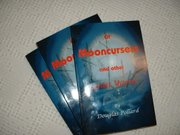
Of Mooncursers and other Spun Yarns

Of Mooncursers and other Spun Yarns
Click the link below and visit my Book site

Monday, December 11, 2006

New German Immagrants to Dundalk

Six or eight neighbors sat on the front porch of our home one summer evening as often happened on warm evenings and this story was told by A German couple in the neighborhood.
Having recently arrived In Baltimore and spending the night at her Brothers house they walked a couple of blocks to Patterson Park.

It was Saturday and a lot of people were in the park, many were laying on blankets sunning them selves. A few were playing with dogs or kids. Most were just walking. These were the same things you might see anywhere in Europe, but there was a small differnece some how. These people seemed more at ease, maybe less formal. Otto thought about the park in his home town and the many hours he spent there as a child. He had pleasant memories of the puppet shows, organ grinders and jugglers. Parks in Germany were somewhat like amusement parks. hildren did not go there alone to play they were always supervised by adults. There was a deep seated fear that they would be stolen by Gypsies and taken to the black forest or some where beyond. Otto new of no one, this had happened to. These tales must have been past down from a time when the country was wild and untamed, when wondering tribes crossed the land and raided small villages. In Europe a park is a place that you get dressed to go to. These American children were poorly dressed and they played rough. He told Paula as wild as they are they may have been well dressed when they left home this morning. She laughed, They walked to the north side of the park were there was a base ball game going on. The couple climbed into the bleachers and watched. Otto could not figure out what was going on. A curious game he thought. Sometimes the man in the middle threw the ball and the other man swung at it and some times he didn't. Some times the people yelled and sometimes they didn't. One man squatting down caught the ball when the other man didn't hit it. Then he would do a funny thing, he'd lift up the padding he had on his belly and putting his hand under it he'd point three fingers at the ground, sometimes two, some times only one. What ever it meant he must have gotten it wrong sometimes because the one throwing the ball shook his head no and sometimes yes, then he'd throw. When all the players changed places all the men in the stands stood up and clapped. There was one man out there every one hated he was dressed like an undertaker. He didn't do much of anything except watch the one man throw the ball. Sometimes he let out an awful grunt. The guy swinging at the ball didn't like it, he got his face right in the undertakers face and he cursed and hollered. The ball was thrown and the black suited fellow said "baa" the man with the stick walked over and stood on a pillow. One of the players came up to Otto and said "hey buddy you want to play base ball we're short a man!" Otto told him he could play soccer but he'd never played base ball. The fellow told him that didn't matter they were short a man and any way he could play right field and he wouldn't have to do nothing nohow. Paula said "go ahead Otto play, if nothing else you can always kick the ball." Otto shrugged his shoulders and said "OK." The guy was right the ball didn't come to him and he was glad. Otto got up to bat and the man in the middle threw the ball right at him, he jumped back, it curved and went across the plate. The next throw the same thing happened. The crowed booed. Otto could not believe anybody could throw a ball like that, curving as it did. You just can't throw a ball in a circle, but this guy could. Otto had a sudden new respect for baseball. The guy that ask him to play yelled something to the guy in black, then walked over and told Otto to stay in there and swing. "He won't hit you" he said, "swing and swing hard." Otto stepped up to the plate, the ball came at him so fast he could hardly see it, he swung as hard as he could he heard a loud crack and the ball went somewhere, he didn't know where. He didn't have any idea what to do next. Somebody yelled "run." He ran to the bag he saw everybody else run to. Somebody was hollering "go to second, go to second run to second base." The only base he saw was one on the other side of the pitcher. Otto ran as hard as he could go, right straight across the middle of the diamond. Every one was yelling at him, he didn't know what to do. A guy ran up to him and yelled in his face. "go to second you dumb ..." Nobody's talks like that to me, he thought. Otto came up with a right square under the mans chin jacking him up off his feet. Otto caught a glimpse of Someone coming at him. He turned bring his guard up to late. He was hit right on the nose blood flew, Otto went down like a pile of bricks. He got up shaking his head to clear his vision, he saw people fighting every where. They were running down out of the stands onto the ball field fighting all the way. Suddenly Otto remembered Paula alone in the stands. He ran for the stands. Then he saw Paula standing off to the side waving at him. He ran to her, "are you all right he asked."
"Oh I'm fine" she said, "you don't look so good though." As they hurried along they heard the wail of a police siren and then another and another. The police were coming straight at them. Otto turned his face away from them pretending to talk to Paula so they couldn't see his battered face. The officers went right on by. As they hurried out of the park Paula asked "what did that man say to you that made you so mad?" "He called me a dumb Pollock," he mumbled through swollen lips. Paula laughed so hard she had to sit down on the curb. She had tears running down her cheeks. Otto looked around people were watching. He was standing there with blood on his face and she was crying. He took her by the arm helping her up he said “lets get back to your brothers before we get ourselves arrested. Her brother took them out to dinner. They had a fine German meal, the restaurant was a beautiful place. This restaurant was obviously very popular with Americans and Germans alike and all were well dressed. The whole place was like a museum with many antique relics of Germany's past. There were beautiful alabaster statues on display in every corner and alcove. On the walls were paintings of the country side in Germany and Austria. They brought back memories to all three of them. Hausners was a beautiful place to eat and the food was good. Paula looked longingly at a lovely little picture of a street in an old Austrian village, a bakery on the corner reminded her of her families bake shop at home. She wondered if she would ever be rid of her home sickness. She missed her mother, the friends she grew up with and most of all she missed Germany, the look of it, the feel, and the smell of it. She had seen no countryside here that looked like it. She wondered, why? In her young life had the changes come about that had destroyed a comfortable way of life and forced them to leave. For a moment she hated the allies that had defeated Germany in world war one. It was their fault, they had compelled Germany to adopt a strong Military government to regain the lands and manufacturing markets stolen from it. Stolen at the armistice ,they were the spoils of war. She worried about the safety of her family in a second war. "The next day was Sunday and we went for a ride with my brother and we found the plot of land we would later buy. It was on Robin wood road on the left side backing up to a hill Kimmels mountain. It was planted in fruit trees, mostly apple and it reminded me of my home land," Paula said. Everyone stood up and clapped. Otto and Paula sat smiling and looking very pleased.

Saturday, December 9, 2006

Saturday at bay Shore Park


Dad parked the old 1929 Ford sedan on Dundalk Ave. All us kids got out carrying towels, picnic basket and bathing suits. We stood at the Dundalk street car stop that was by many still called the train stop. None of us kids ever saw a train on those tracks. But there was a time when trains ran from Baltimore to Sparrows Point.

In a few minutes we could see the Red Rocket swaying it's way toward us. The old car stopped and after a massive merging and separating people some headed off across the tracks to Dundalk as well as the other way to St. Helena. ( pronounced back then as Sanealina). Baltimoreans couldn't or wouldn't say any two words separately. They ran them together or left some of the letters out and maybe both.. As a result most that I know can't spell anything correctly including me. To get aboard the Red Rocket you moved in close to the back door so that nobody could get off. By some mirical of maneuverability The comers and goers kind of merged and at the same time separated as streetcar riders were prone to do. Through some unspoken understanding everybody wound up where they were supposed to be,and good naturally at that.

Riding the number twenty six streetcar was a was a thing that a book could be written about. If You paid a nickel to get on anywhere east of downtown you could go anyplace south, North or West. At the same time If you didn't get a transfer you could get a return ticket free. If you got a transfer you could buy a return ticket for a penny. If you got on anywhere East of down town and headed East you could go to bay Shore Park and use the transfer to go back home.

Well after we got our fairs all settled we made our way forward to find seats. The old wooden cars creaked and groaned as they swayed from side to side. The front was swaying one way and the back the other way. If you were in the middle you hardly rocked at all. There were straps hanging from the overhead for standing passengers to hang onto and they swing so violently the slapped the celling. The car was steady picking up speed and and did not stop often after Dundalk. It rolled along threatening to jump off the track at breakneck speed.

A sudden loud roaring sound passed over as an airplane taking off strained to clear the streetcar lines over head. With windows open you could stick your head out a few inches to the metal grate that was there to keep you from getting your head cut off on the side of a truck or other streetcar. We rumble too a stop in Turners Station a few got on and off and we were rolling again. We came to a stop in what looked to be the middle of nothing and people got off carrying fishing poles and some got on with strings of fish and bushels of crabs.

There to the right was the Sunken Barges. Old sailing ships set rotting on the bottom some with masts but most without. People set all around the edges of the hulls fishing and crabbing. We all craned our necks to see as we rolled on. And then the car slowed for the Bear Creek bridge. The trolley eased out on the rickety wooden structure with its crooked rails. Some hid their faces in their hands and the look of concern was on the face of all but the most practiced riders.

My brother sat unconcerned as he road the streetcar across this bridge everyday on his way to Sparrows Point High School where most Dundalk High School kids attended. My sisters were soon to go there as well.

The car came to a halt at the swing section in the middle and then proceeded at a walking pace until on solid tracks again. It picked up speed and was flying just before leaving the bridge The motorman could be seen standing there looking in the mirror at everyone and smiling at us and plainly enjoying the tense faces behind him.

Heading through Sparrows point was a thing to see, Everywhere steam engines pulled rail cars , some were loaded with molten ore or slag to be dumped along the Chesapeake bays shore line, making land as the went. You could feel the heat on your face and arms as we rolled past those fire y cars. Huge blast furnaces stood in a row billowing smoke. Red fires and smoke showed through a hundred openings. Solid tire chain driven trucks trundled their earth shaking loads along cracked and crumbling roads. Roads that could in no way stand the loads carried on them. We road past wooden and brick houses covered in soot and coal dust, that appeared to rust like ancient metal.

In a short time we broke out into clear air and sunlight. The Bay shimmered in the sunlight Its blue gray and green water rolling in the breeze. We soon crossed a bridge and were now looking at the roller coaster in the not to distant Bay Shore Park. Now in full view were buildings, rides and a parking lot full of cars and a most beautiful beach stretch out in front of us. A full football field length wide and people standing standing in the water better than a hundred yards out. The water was about four feet deep out at that distance.

We all got off the street car while the conductor and motorman traded ends flipping the seats back so that the boarding passengers would be facing forward.

The smell of hot dogs, popcorn, steaming crabs and the salty bay filled the air. A caliapy played John Fillip Susas marches both schrill and loud. Barkers yelled out to the crowds while imploring them to win a doll, see a wild man, or go just one round with the local champion boxer. The roar, clatter and screams of the roller coaster suddenly drowned out all else as we all ran to the bath house to change cloths.

In a few minutes we were all in the water. In only a few more minutes some Dundalk boys came running over to spend the day with my sisters. Those boys the girls and my brother were soon off to dance in the huge dance pavilion to the music of a dance band. There was jitterbug, waltz polka, and tango contests all day long an late into the evening.

Most people there were from Baltimore. There were Germans, Italians, Poles and Jews who had always been a big part pf Baltimore. They all spoke in their native lounges all trying to be heard above the din. The most recent immigrants were the German jews they weren't much liked by most people. Not because they were jews I don't think. More because the were aggressive in doing business. Baltimore was kind of small townish and for someone to come out on street and try to force you in the store was hated by everyone. That was their way. There were more coming all the time and with them they brought a sadness. All the different factions in Baltimore stuck together. Italians did not gather on the beach with Poles. The Jews would spread their towels out in the middle of a bunch of Welshmen and shout back and forth in Yitish. All those immagents were wiser than we were they knew Europe and they knew the horror that was coming. After hundreds of generation with war in Europe they could smell war three thousand miles away and years in advance. They knew.

Thinking back I think the young men and girls were trying to make up for the lost time that was coming. They talked about it at our house, the war in Europe that would come to America and they were frightened. I think people tried to ignore the coming horror and at the same time there was a little bit of sadness in gatherings for conversation.

The grown ups drank huge quantities of beer. They danced, laughed and had one big blowout. But it wasn't just the grown ups the children were a big part of the party. Here is where we had the beginnings of learning to dance. We were welcomed good naturedly on the dance floor with the adults.

The revelry continued until midnight. My brother had caught a ride home and brought our car back. All us kids sleep on the way home.

Friday, December 8, 2006

Out of depression

Dundalk was not long out of the depression. The town was still feeling its effects but was to some degree feeling prosperous. People had money to spend and could have spent a lot more than they did. We kids were daily treated to the wisdom that at any time the bottom could fall out and the horror stories of many that had lost everything and without care it could be our families at a time in the near future. The use of credit would have pushed things along faster and there was now plenty available. There were few takers though.

Across from the Dundalk streetcar stop was Dundalk Taxi Cab Company owned By mister Graff. Next door was Jimmy Mark's Boiling Ally. A lot of teenage boys set up pins here Those long boys with big hands did very well. If they were fast enough the tips would slid down the alleys. These kids worked till midnight on bolling league nights. Teachers were somewhat understanding about their homework and the fact that they often dozed off in class. Many of the boys were from immagent families who came to this country without a trade to work at. They were the first hit by the depression and the last to recover. In some cases that bolling ally money was needed by the family. All us boys were treated to the saying "Learn a trade be somebody and you will never be out of work." It worked for me. I doubt it was true but some said the bowling ally was built in a marsh and that they drove five thousand pileings to set it on. Like most tales of this nature there were probably some pilings underneath the place.
In the next block was Dundalk Hardware. To paint a house many people who did not trust canned paint, would buy ten pounds of white lead, a gallon, of boiled linseed oil, and a little turpentine along with that a quarter pint of Japan dryers. All mixed together you had a fine coat of paint that killed rot, fungus, bugs, germs and children if they ate it. I don't think any kids I knew ate paint, we ate food. We did chew tar. Gosh! Who knows why, it didn't taste like much. Seems I remember that it was good for your teeth. Now there teeth was something some of the kids could have used some help with. They had green teeth, I guess from a lack of brushing.
There were local town rivalries, that I think were inspired by baseball. Dundalk and every town around had a ball team. In Dundalk ball games were always played on the diamond at the school. Spirits ran high and nearly the whole town attended. It seemed every kid in town had a desire to climb the backstop. There was usually a policeman standing at it's back who could with one knot raising smack across. your calves, keep a fellow off of there for the rest of the day.

Dundalk had the nicest tennis courts around. There were three or four red clay courts all fenced about ten feet high. It was a strange thing, the boys all thought it was a girls game. Boys hung around but never played. Our next door neighbor Otts Mc Clelland got so angry when they asphalted over the red clay tennis courts he built his own and envited everyone to play on his courts, many did
Dundalk Bathing beach was the local place to go for a swim. It's local name was Snake Hole. Just around the bend was a marsh and snakes on occasion came from there. There was some truth, that on occasion, a snake would swim right through the middle of the place creating quite a stir among the swimmers. The beach was owned or run by Don Might and was really quite nice with picnic tables, and grassy areas that were dotted with thorny trees with white washed trunks. You didn't climb them!
Don was the only prominent man in town that the kids called by his first name. Don was short but built like a small bulldozer. He was an ex professional wrestler at a time when they really competed. You could pick him out in a crowd. Wih a neck, as big as his head and a barrel chest with long muscular arms. He walked with his own pecular gate that had a way of looking mennacing. A mark of a wrestler was coliflour ears and he had'em. His body was covered with red hair and I don't think his red head ever got wet it shed water like a duck. Now here was a fellow that ran a pretty tight ship. His gravelly voice over a megaphone was usually enough to command respect. Sometimes someone would try him but he usually just called the police. Across the creak from the beach was a place called HOLIDAY PARK. Sometime before the war It became part of the Maryland orphanage system. A large side wheel steamboat named Ann Arundel would come in there and spend the day and hundreds of orphans would get off to swim and play. You could see they were having a good time. It also made a boy or girl glad he had his Parents.

Maybe someone can correct me on these names I think they are correct but I wouldn't bet the farm on it.

Thursday, December 7, 2006

What was to do in Dundalk

Being a young man or a young women in Dundalk must have been a fine time. There was plenty to do if you were over twenty-one. There were night clubs all around town but none in town. There was plenty of drinking to be sure but dancing was really what it was all about. This was the time of the big band and every night club in the Dundalk area of any size had a six to nine piece band. Some smaller places had a three piece group. Even the smallest joint in town had a piano and a player. There was good music and large crowds at Dovies night club at the corner of Stansbury and Merritt Avenue. John Deluca's Place in St Helena packed them in. Down Dundalk Ave. was Peanut Hall. Peanuts were free and the shells went on the floor till they were several inches thick. Right around the corner from there was the Woodland Inn,. Friday, Saturday and Wednesday nights were all a big time. When people went out back then, they were dressed to the nines as the saying goes.

A fellow would say “What'ya wanna do tonight baby,” and the answer was sure to be “Lets go dancing.”

You could drive out to Josenhans corner in Essex and they had free steamed crabs all you could eat. All you had to do was buy beer. Crabs were so cheap you couldn't buy less than a bushel I think about 25 cents was the price.
So getting back to Dundalk, what did us little kids do? Well out on Robinwood Rd. we often walked to Dundalk with our mothers, down Midland Rd. to Sollers Point Rd. and across the Railroad tracks to Dunman Way, past Dundalk Elementary and the junior high school on Play field St., on across the park, past the Bandstand and over to the Community Department Store.

Mr. Sax the owner was a wise man. He knew the taste of most of his customers. I remember him saying to my Mom, “Mrs. Pollard, look at the sewing in that dress I know that won't measure up to your needs.” “Now look at this it's the kind of thing you like and look how it is stitched.”

He would open the dress so the seems could be seen. My mother would touch the threads and say, “Yes, I believe your right Mr Sax, but the price....”

“Mrs. Pollard, consider this, I and some other shop owners in the city bought a case of these so you won't have to walk down the street and see yourself coming.” 'There is only one of these in Dundalk and because we bought a case, I can let you have it at $ 2.39.'

She could squeeze a dollar until the Eagle hollered but sometimes she bought it.

About all my clothes came from there as well as my “Poll Parrot” shoes. When after a time they were relegated to being play shoes my father would rivet harness leather on the toes. Because I was prone to kicking tin cans as I walked and would ruin my shoes in a short time.

If my father needed a pair of pants or a shirt we all went in the car. Sometimes he and I would go off and leave the women, He would go into Lillac's Pharmacy to buy cigarettes they sold them loose two for a penny. Dad would buy three. He made them last, he would take a few puffs and butt it sticking it in his shirt pocket. His shirt pockets were all black inside showing through where the ashes had stained the inside. He also kept a corn cob pipe at work and he would smoke the buts in that.

Dr. Lillac always had a older teenage girl or boy working at the soda fountain. If the father or mother of a house hold came in to buy at the fountain he always came out to talk. Teenage boys and girls setting in the booths drank Vanilla, Chocolate, or phosphate Cokes. Mr. Lillac liked talking to the kids and would lean against the booths like a kid while talking. Whether he was friendly or not the kids behaved in his store.
Sometimes Dad would give me a few pennies to go to McKevers delicatessen where I could get two pieces of candy for a penny. Then I'd put another penny on the counter and fish around in the pickle barrel for the biggest pickle I could find. It's hard to say how many hairy arms had been in that barrel up to the elbow in saltbrine, before all the pickles were gone? I saved the other penny to put toward a “Captain Midnight Secret Decoder Ring” even though I couldn't spell yet. While I was at McKevers, Dad would be in Sheff's Stag Bar having a beer.
My brother Charlie almost never went with us. He was in high school and I'm sure was loathe to be seen with his Mother and Father. Besides he was an ice man and that kept him plenty busy in the summer. They also moved furniture during the winter using the ice trucks to haul it around. A fellow could build up a muscle or two doing that.
We always went to Knoop's Hardware and Dad would buy some needed thing. I liked that place. Mr. Knoop bought nails that us kids pulled out of boards and straightened with a hammer and then he resold them at half the price of new ones. My first batch of nails was rejected by Mr Knoop. I took them home and worked on them some more. He found them strait enough to sell and I had a nickel. That was a pretty fair income for a boy that hadn't even started to school yet. The boy that could get his nails straightest had a certain amount of respect from the rest of us. A few were darn near perfect. I think they might have had a roller to straighten them with.
There were a lot of other store's there along Shipping Place. There was a bank, a shoe shop, a couple dress shops and the Strand Bakery. The Police Station was there along with the Fire Department.. The place got to be a local hangout and there were a few cracks made toward women shoppers passing by that started a scandal. Somehow it was all worked out to everybody's satisfaction and life went on.
The big thing in town was the Strand Theater and it was the only one for a long time. Sunday night with standing room only the balcony and side isles full the temperature would skyrocket. Air conditioning had yet to arrive.

Tuesday, December 5, 2006

Goin' over Dundalk


We in Dundalk Farms weren't quite "Dundalkers", at least in our own minds anyway. We all talked about walking over Dundalk and that's what we did and that's where you did things. You shopped, went to the movies, went to Church, and caught the Red Rocket (otherwise known as the #26 street car) to Baltimore. Boy! There could be a whole book written about riding the Red Rocket.
We became "Dundalkers" when we started to school. We went to Dundalk Elementary school and we could walk there. If you lived more than a mile away you had to ride a bus unless you got thrown off, which boys were prone to do.
I remember one troublesome boy having to walk from very near Old North Point road. That had to be four miles. He was a hardheaded Dutchman. The Teacher Mrs. Merritt offered him a ride home because he had a blister as big as a quarter on his heel. He replied, "The Principal said walk." The boy stood up and said, "If you'll give me one of them Band-aids ma'am I'll walk. I ain't lettin' no school off that easy." Those who rode a bus could not claim to be from Dundalk. They were from Holabird or some other nearby town or area and most were proud of it too. There was a fair amount of rivalry among the different communities. Most of it came from baseball, there being a ball park in every little town. Sandlot ball was a big deal in those days. Dundalk had several beautiful red clay tennis courts but only girls played. We boys thought it was a sissy game. For boys the big thing was shooting marbles. Now shooting “hootles” always led to fighting so we all got pretty good at that as well.
St Helena and Dundalk were called (a little tongue in cheek) twin cities. There was a restaurant on Dundalk avenue named the Twin Cities Restaurant. People hung out there from both sides of the street and with local rivalries being what they are there was often a doggone good fist fight to be had there. Pain and suffering being not among my favorite interests I always endeavored to be a nonparticipant. Stand aside always begets pain. So standing still makes a fellow a target and a non-moving one at that and there you go right in the middle of it. Good old Baltimore you'd get arrested for spitting on the sidewalk but you could fight up and down the streets and alleys all you wanted as long as you didn't spit or cuss. Local people didn't curse anyway—they cussed.


I'll do one more post describing Dundalk back in those days and then we will write a book.
By-the-way anybody know the fellow in the picture? It was taken at the old Logan air field there, where Logan village is now. My father took the picture in the late 1930's. I've had it all my life, don't know who it is but can't bring myself to toss it. Doug

Sunday, December 3, 2006

Kimmels Mountain

In Dundalk there was an airport, Logan Field, that had been a military airport during World War One. It was a place where many Sunday afternoons were spent watching airplanes take off and land. The military training planes were busy seven days a week. They were painted blue and yellow and stood out from the commercial and private planes that set all around the field. It was here that my Father put me on a Ford Tri-motor passenger plane for a tour around Baltimore for about 20 minutes. He would not put out the two dollars it would have cost for himself to go, but they had a couple empty seats and the Pilot let me go for a quarter. Two dollars was a lot of money.

The field was too small for the new airliners that were now in service and these new DC 3 airliners were struggling to take off and to clear the nearby houses that were encroaching on its glide path and at the end of the runways.

There was a terminal where the China Clippers were landing in the Baltimore harbor. These huge seaplanes were carrying passengers back and fourth from South America, the Caribbean and Florida. Baltimore thought this was the future of air travel, and so, the city decided to build an airport in the harbor where DC3's could land as well as seaplanes. Kimmel's Mountain was the place to get the dirt to fill a section of the harbor for the airport. Kimmel's Mountain was a beautiful place. It was a huge stand of hardwood trees--oak, ash, gum and other trees with different nut bearing trees in the mix. Around its edges it had grown up in blackberries and raspberries, as well as strawberries and goose berries with an occasional wild cherry tree. During the summer, some of the local families would search there for the variety of berries and nuts. By Christmas every dining table in every house was filled with nuts. Paths criss-crossed through the woods and were a favorite place for family walks. The only danger there was that of walking up on unaware lovers. In the early 1930's they began digging up the hill and hauling it away by the dump truck load. They started on the other side of the hill from our house and for years they dug away at the hill. Early on, there were three huge shovels and maybe fifty dump trucks working. After awhile they were down to one really huge shovel. It was a true steam shovel with a shovel so big a full grown man could stand up inside of it. Two of its shovels would fill the biggest Mack "chain-drive" dump truck they had. The sight of that huge shovel digging only about a hundred and fifty yards a way was kind of frightening. I remember my sister Madge saying it scared her and how she hated that thing. It was kind of like a huge earth eating monster chomping ever closer day by day and there was no stopping it.

Steam shovels and dump trucks were all that filled mine and the other kids minds at that time. I got my bottom switched several times for sneaking away to go up and watch that shovel work. We all played steam shovel as small kids. We would squat down and use a tin can while pretending we were steam shovels digging in the dirt and making steam shovel noises all the while. A large coffee can, because of its size, could be traded for a cap pistol any time. We dug a hole at least 10 feet in diameter and 5 feet deep. We covered it up with a wooden roof a rug and a layer of dirt. My dog used it for a dog house, as it was warm in the winter and cool in the summer. On a hot day it was hard to get him to come out.

Kimmel's Mountain was actually a sand dune that had been left there about a hundred thousand years before when the Atlantic coast was along that area. In March or during a good thunderstorm the wind would pick up clouds of sand and blow them all over the neighborhood. I remember Mom stuffing rags under the door once in a storm. The front porch had an inch of sand on it and everything in the house a layer of dust.

Friday, December 1, 2006

Growing up Dundalk

Robinwood Rd. Dundalk, MD

As stated this will be the writing of a book If you follow along from day to day you will experience it as written. You will read it with bad punctuation, spelling and all it's other wart's and then you will see it as it is edited. You will see what I keep and what I throw away. You will be able to see it through to completion and then buy it from a print on demand publisher online. I expect this writing to take at least a year and maybe two. Know this! I am not a teacher and not only that I have almost no education. This would not be the way to write a book by almost anyone's standards. However it is my way so take my methods for what they're worth or don't take them at all. I would like to propose a toast to all of us and our completion of a book about Dundalk and it's folks. To "Dundalk and it's folks", it's success or failure.
These first posts will lay some groundwork by way of identifying some people, places and times and then we will begin the telling of a story. I have no idea what we will write but from experience I have every confidence it will all come together. Certainly not without numerous hitches.
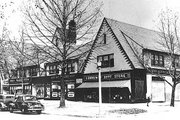
The above picture is of The Pollard home place. My parents, Fred and Ruby, had four children Charlie, Dot, Madge, and Dougie (that's me). Charlie and I both had a lot of friends and the girls were beautiful so there was never a shortage of young men hanging around with rapidly beating hearts.
I'm only slightly kidding when I say I remember everything. I remember most everything. I was born on Robinwood Rd. in Dundalk Farms in 1934. My family had moved to Baltimore from Georgia in the 1920's so we weren't native Marylanders. I think they held Baltimore and it's people a little in awe. My father and older brother built our house as did most of the neighbors at the time. The neighboring fields were farmland grown over with broom straw. There were houses speckled here and there along gravel roads. Most houses were built on one acre lots of land with only a few having bought two acres.
At age two, I remember my diapers hanging on a makeshift clothesline which stretched from our pot bellied stove which supplied our heat to the chimney that was at the end of the four room house. I had asthma so I spent a fair amount of time lying on the wicker sofa where I could see everyone. I would catch a cold and do my death defying act of continuing to breath. I lay there a great deal of the time from December through March when I would perk up and make up for lost time.
Our house was under construction as were most of the homes on our road. We had sheet rock up on the interior walls with asphalt shingles on the outside the first winter. We walked on sub-floors covered with second hand carpets. A sudden gust of March wind would sometimes raise the carpets off the floor in some places. Sounds kind of hard nowadays but the world was slowly recovering from the depression and my father worked two days a week at a good job. We were better off than many.
Most of our neighbors built the same way my parents did. They would not borrow a nickle to build. They were all too well aware of what would happen if the depression got bad again. Any of them could be made to shudder by the mere mention of the word mortgage. Otts McClelland next door was a railroad fireman. He fired a steam Locomotive at Sparrows Point all night and worked on his house all day. Otto Walter, from across the street, was a tool and die maker at Glen L. Martin co., where they built airplanes. My father, Fred Pollard, was a machinist at Western Electric co., on Broning Highway. In those times a highly skilled tradesman who worked for a good company could afford to live in a neighborhood and rub elbows with Steel mill management and other executives.